Showing posts with label citywide read. Show all posts

Monday, October 4, 2010

Citywide Read Book Discussion

 
The Bookenders Book Group met to talk about To Kill a Mockingbird by Harper Lee on Wednesday, September 29 for the citywide read. We had a great time. The interesting and insightful discussion led by Carl Sederholm was enjoyed by all who attended. We discussed many things such as Scout's perspective and what that meant for the story, racial relations, why this beloved classic is on the banned books list, the shooting of the rabid dog, small town life, why most children have a Boo Radley, if Tom Robinson was doomed no matter what choice he made and so much more.  At one point Katie Marsh wondered about Atticus telling his son to shoot the blue jays and not the mockingbirds.  She was confused by this because everything else in Atticus's wisdom and character would not have been ok with shooting the blue jays. That led to more interesting insights into the story and why Atticus would say such a thing.


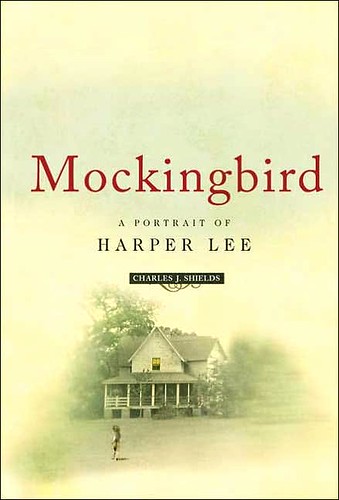
We also discussed the life of Harper Lee and the information found in the book Mockingbird:  A Portrait of Harper Lee by Charles Shields.  We talked about her relationship with Truman Capote and how she helped him with research of his book In Cold Blood.  We speculated on why she never wrote another book and wondered if maybe she has written one to be published after her death.  Linda Butler pointed out that there is nothing wrong with writing just one really great American novel and that Harper Lee deserves to be proud of that.

One of the very few pictures of Harper Lee and Truman Capote together
                                   
After the discussion we served pound cake with mixed berries and whipped topping.


One last thought -

Harper Lee has been very reclusive for years.  However, in July 2006 she wrote a letter to Oprah Winfrey which was published in the Oprah magazine.  It is a rare published item by her that tells how she became a reader as a child in Depression-era Alabama. This sweet essay shows how much we are missing when we read and discuss biographies written about her.  Ultimately we can hope that someday there might be one written in her own words that can tell us of her own thoughts and feelings without speculation. 


This is the letter she wrote:

Dear Oprah,

Do you remember when you learned to read, or like me, can you not even remember a time when you didn't know how? I must have learned from having been read to by my family. My sisters and brother, much older, read aloud to keep me from pestering them; my mother read me a story every day, usually a children's classic, and my father read from the four newspapers he got through every evening. Then, of course, it was Uncle Wiggily at bedtime.

So I arrived in the first grade, literate, with a curious cultural assimilation of American history, romance, the Rover Boys, Rapunzel, and The Mobile Press. Early signs of genius? Far from it. Reading was an accomplishment I shared with several local contemporaries. Why this endemic precocity? Because in my hometown, a remote village in the early 1930s, youngsters had little to do but read. A movie? Not often--movies weren't for small children. A park for games? Not a hope. We're talking unpaved streets here, and the Depression.

Books were scarce. There was nothing you could call a public library, we were a hundred miles away from a department store's books section, so we children began to circulate reading material among ourselves until each child had read another's entire stock. There were long dry spells broken by the new Christmas books, which started the rounds again.

As we grew older, we began to realize what our books were worth: Anne of Green Gables was worth two Bobbsey Twins; two Rover Boys were an even swap for two Tom Swifts. Aesthetic frissons ran a poor second to the thrills of acquisition. The goal, a full set of a series, was attained only once by an individual of exceptional greed--he swapped his sister's doll buggy.

We were privileged. There were children, mostly from rural areas, who had never looked into a book until they went to school. They had to be taught to read in the first grade, and we were impatient with them for having to catch up. We ignored them.

And it wasn't until we were grown, some of us, that we discovered what had befallen the children of our African-American servants. In some of their schools, pupils learned to read three-to-one--three children to one book, which was more than likely a cast-off primer from a white grammar school. We seldom saw them until, older, they came to work for us.

Now, 75 years later in an abundant society where people have laptops, cell phones, iPods, and minds like empty rooms, I still plod along with books. Instant information is not for me. I prefer to search library stacks because when I work to learn something, I remember it.

And, Oprah, can you imagine curling up in bed to read a computer? Weeping for Anna Karenina and being terrified by Hannibal Lecter, entering the heart of darkness with Mistah Kurtz, having Holden Caulfield ring you up--some things should happen on soft pages, not cold metal.

The village of my childhood is gone, with it most of the book collectors, including the dodgy one who swapped his complete set of Seckatary Hawkinses for a shotgun and kept it until it was retrieved by an irate parent.

Now we are three in number and live hundreds of miles away from each other. We still keep in touch by telephone conversations of recurrent theme: "What is your name again?" followed by "What are you reading?" We don't always remember.


Much love,
Harper


Wednesday, September 29, 2010

You might also enjoy...

Have you seen the movie that is based on the book To Kill a Mockingbird? 

                                                                          
It’s rare that a movie captures the magic of a great book, and yet holds its own as a masterpiece of cinema. To Kill a Mockingbird does just that. Released in 1962 it quickly became a much-loved, critically-acclaimed and classic film.


Set in a small Alabama town during the Great Depression, it raises great questions of racism, poverty, ignorance and injustice with enormous grace and emotional power. Moral and deeply humane, the movie is a classic coming-of-age story of childhood innocence lost in the segregated American south.

Gregory Peck stars as Atticus Finch and Brock Peters is Tom Robinson.  Newcomers Mary Badham and Phillip Alford star as Scout and Jem.


This film also marked the debut of Robert Duvall as Boo Radley. 
                              booradley.jpg image by Dangerfeild4Life

The film won 3 Academy Awards out of the 8 it was nominated for. Gregory Peck won for Best Actor. In a 1997 interview Peck said, "Hardly a day passes that I don't think how lucky I was to be cast in that film. I recently sat at a dinner next to a woman who saw it when she was 14 years old, and she said it changed her life. I hear things like that all the time."


Harper Lee and Gregory Peck became great friends.  She gave him her father's beloved pocket watch as a gift after playing him in the movie.

The library has To Kill a Mockingbird on DVD and VHS. 

Friday, September 24, 2010

Memorable Quotations from TO KILL A MOCKINGBIRD


 Maycomb was an old town, but it was a tired old town when I first knew it. In rainy weather the streets turned to red slop; grass grew on sidewalks, the courthouse sagged in the square. Somehow, it was hotter then: a black dog suffered on a summer's day; bony mules hitched to Hoover carts flicked flies in the sweltering shade of the live oaks on the square. Men's stiff collars wilted by nine in the morning. Ladies bathed before noon, after their three-o'clock naps, and by nightfall were like soft teacakes with frostings of sweat and sweet talcum.~Harper Lee, To Kill a Mocking Bird, Chapter 1 (Scout speaking)


Until I feared I would lose it, I never loved to read. One does not love breathing.~Harper Lee, To Kill a Mockingbird, Chapter 2 (Scout speaking)

You never really understand a person until you consider things from his point of view--until you climb inside of his skin and walk around in it.~Harper Lee, To Kill a Mockingbird, Chapter 3 (Atticus Finch to daughter Scout)

There are just some kind of men who - who're so busy worrying about the next world they've never learned to live in this one, and you can look down the street and see the results.~Harper Lee, To Kill a Mockingbird, Chapter 5 (Miss Maudie Atkinson speaking)

The sixth grade seemed to please him from the beginning:  he went through a brief Egyptian Period that baffled me - he tried to walk flat a great deal, sticking one arm in front of him and one in back of him, putting one foot behind the other.  He declared Egyptians walked that way; I said if they did I didn't see how they got anything done, but Jem said they accomplished more than the Americans ever did, they invented toilet paper and perpetual embalming, and asked where would we be today if they hadn't?  Atticus told me to delete the adjectives and I'd have the facts.  ~Harper Lee, To Kill a Mockingbird, Chapter 7  (Scout speaking)

When a child asks you something, answer him, for goodness' sake.  But don't make a production of it.  Children are children, but they can spot an evasion quicker than adults, and evasion simply muddles 'em.  ~Harper Lee, To Kill a Mockingbird, Chapter 9 (Atticus speaking)

I was born good but had grown progressively worse every year.~Harper Lee, To Kill a Mockingbird, Chapter 9 (Scout speaking)

Mockingbirds don't do one thing but make music for us to enjoy. They don't eat up people's gardens, don't nest in corncribs, they don't do one thing but sing their hearts out for us. That's why it's a sin to kill a mockingbird.~Harper Lee, To Kill a Mockingbird, Chapter 10 (Miss Maudie Atkinson speaking to Scout)


It was times like these when I thought my father, who hated guns and had never been to any wars, was the bravest man who ever lived.  ~Harper Lee, To Kill a Mockingbird, Chapter 11 (Scout speaking)

They're certainly entitled to think that, and they're entitled to full respect for their opinions... but before I can live with other folks I've got to live with myself.  The one thing that doesn't abide by majority rule is a person's conscience.  ~Harper Lee, To Kill a Mockingbird, Chapter 11 (Atticus speaking)
  
I wanted you to see what real courage is, instead of getting the idea that courage is a man with a gun in his hand.  It's when you know you're licked before you begin but you begin anyway and you see it through no matter what.  You rarely win, but sometimes you do.  ~Harper Lee, To Kill a Mockingbird, Chapter 11 (Atticus speaking)

She seemed glad to see me when I appeared in the kitchen, and by watching her I began to think there was some skill involved in being a girl.  ~Harper Lee, To Kill a Mockingbird, Chapter 12 (Scout speaking)

So it took an eight-year-old child to bring 'em to their senses.... That proves something - that a gang of wild animals can be stopped, simply because they're still human.  Hmp, maybe we need a police force of children.  ~Harper Lee, To Kill a Mockingbird, Chapter 16 (Atticus speaking)

I'm no idealist to believe firmly in the integrity of our courts and in the jury system - that is no ideal to me, it is a living, working reality. Gentlemen, a court is no better than each man of you sitting before me on this jury. A court is only as sound as its jury, and a jury is only as sound as the men who make it up.~Harper Lee, To Kill a Mockingbird, Chapter 20 (speech to the jury by Atticus Finch)

Harper Lee at the courthouse depicted in To Kill a Mockingbird
 "I think I'll be a clown when I get grown," said Dill.  "Yes, sir, a clown.... There ain't one thing in this world I can do about folks except laugh, so I'm gonna join the circus and laugh my head off."  "You got it backwards, Dill," said Jem.  "Clowns are sad, it's folks that laugh at them."  "Well, I'm gonna be a new kind of clown.  I'm gonna stand in the middle of the ring and laugh at the folks."  ~Harper Lee, To Kill a Mockingbird, Chapter 22

The one place where a man ought to get a square deal is in a courtroom, be he any color of the rainbow, but people have a way of carrying their resentments right into a jury box.  As you grow older, you'll see white men cheat black men every day of your life, but let me tell you something and don't you forget it - whenever a white man does that to a black man, no matter who he is, how rich he is, or how fine a family he comes from, that white man is trash.  ~Harper Lee, To Kill a Mockingbird, Chapter 23 (Atticus speaking)
 I think there's just one kind of folks.  Folks.  ~Harper Lee, To Kill a Mockingbird, Chapter 23 (Scout speaking)

If there's just one kind of folks, why can't they get along with each other? If they're all alike, why do they go out of their way to despise each other? Scout, I think I'm beginning to understand something. I think I'm beginning to understand why Boo Radley's stayed shut up in the house all this time. It's because he wants to stay inside.~Harper Lee, To Kill a Mockingbird, Chapter 23 (Jem speaking)

Neighbors bring food with death and flowers with sickness and little things in between. Boo was our neighbor. He gave us two soap dolls, a broken watch and chain, a pair of good-luck pennies, and our lives. But neighbors give in return. We never put back into the tree what we took out of it: we had given him nothing, and it made me sad.~Harper Lee, To Kill a Mockingbird, Chapter 31 (Scout speaking)


Tuesday, August 31, 2010

Harper Lee

Harper Lee is Awarded the Presidential Medal of Freedom on November 5, 2007

This year marks the 50th anniversary of the publication of To Kill a Mockingbird. To view a clip from the upcoming documentary "Hey, Boo: Harper Lee and To Kill a Mockingbird," click here.

Mockingbird: a Portrait of Harper Lee by Charles J. Shields will be reviewed at R.E.A.D. book group on Thursday, September 2nd at 10 a.m. by Tammra Salisbury. It will also be part of the citywide read discussion at Bookenders book group on Wednesday, September 29th at 7 p.m. Carl Sederholm, a popular professor at Brigham Young University, will lead the discussion on To Kill a Mockingbird and Mockingbird: a Portrait of Harper Lee. 


To Kill a Mockingbird—the twentieth century’s most widely read American novel—has sold thirty million copies and still sells a million yearly. Yet despite her book’s perennial popularity, its creator, Harper Lee, has become a somewhat mysterious figure. Now, after years of research, Charles J. Shields brings to life the warmhearted, high-spirited, and occasionally hardheaded woman who gave us two of American literature’s most unforgettable characters—Atticus Finch and his daughter, Scout.

At the center of Shields’s evocative, lively book is the story of Lee’s struggle to create her famous novel, but her colorful life contains many highlights—her girlhood as a tomboy in overalls in tiny Monroeville, Alabama; the murder trial that made her beloved father’s reputation and inspired her great work; her journey to Kansas as Truman Capote’s ally and research assistant to help report the story of In Cold Blood. Mockingbird—unique, highly entertaining, filled with humor and heart—is a wide-ranging, idiosyncratic portrait of a writer, her dream, and the place and people whom she made immortal.

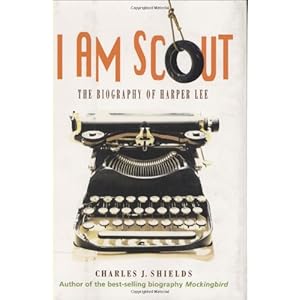
I Am Scout: the Biography of Harper Lee is the young adult version of Mockingbird: a Portrait of Harper Lee.


It's a perfect book for teens who loved To Kill a Mockingbird and want to find out more about the author.

Charles J Shields

Charles J. Shields spent four years researching and writing Mockingbird. A former English teacher who taught Harper Lee's novel for a number of years, he later became a writer of nonfiction books for young people. For Mockingbird, he interviewed over 600 of Harper Lee's neighbors, childhood friends, law school classmates, and Kansas residents who became her friends while she was there helping Truman Capote research In Cold Blood. As a result of Shields' research into Truman Capote's papers, the papers of Harper Lee's agent, and the archives in the courthouse and historical museum in Lee's hometown of Monroeville, Alabama, information never before known appears in this insightful portrait of the Pulitzer prize-winning author, who stopped giving interviews in 1964. From her beginnings as an Alabama tomboy, to her novel's beginnings as a handful of stories, to a rough draft called Atticus, to its present form as one of the most popular books of the 20th century, the story of To Kill a Mockingbird and its author is told here for the first time.

Shields has a B.A. in English and an M.A. in American history from the University of Illinois, Champaign-Urbana, where he was a James Scholar. He lives in central Virginia with his wife, Guadalupe. 

2010 Citywide Read at Pleasant Grove Library

2010 City-Wide Read Flyer

To enhance your reading, you will find a readers' guide here.